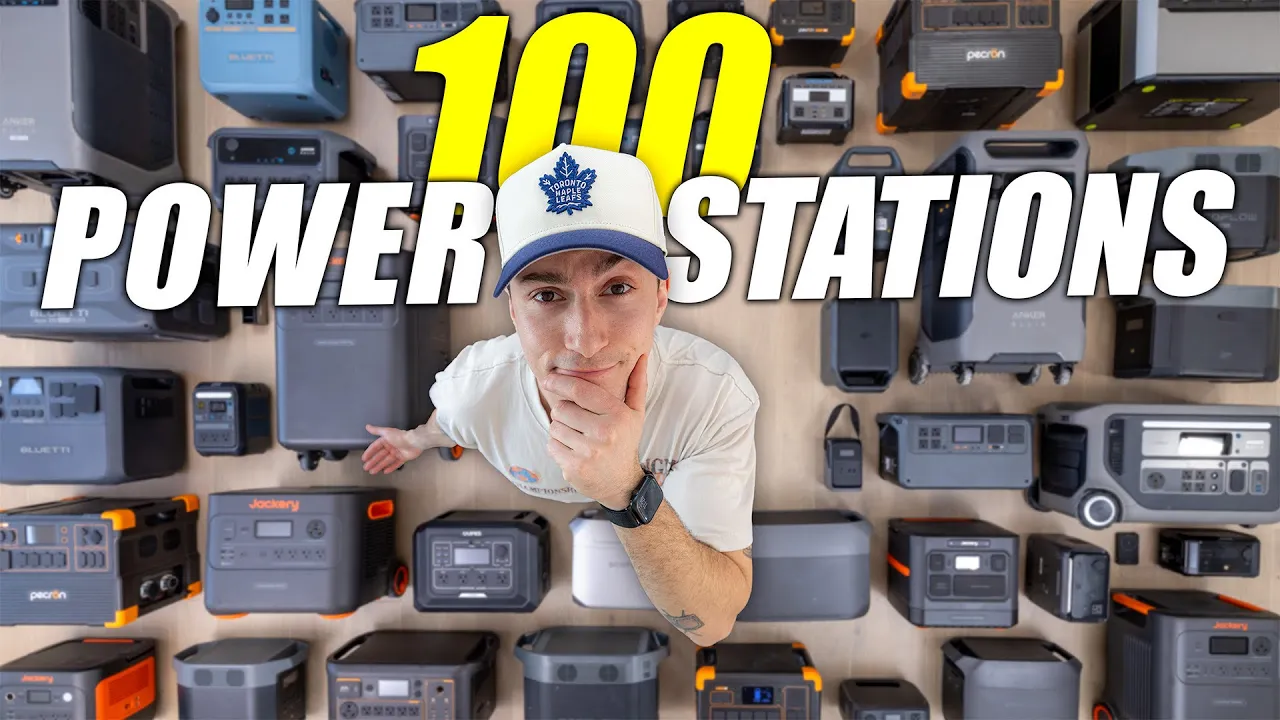
Over the past few years, we’ve put a huge variety of portable power stations through extensive real-world testing. Some have been excellent. Others… honestly pretty terrible.
Our goal with all of this testing has always been really simple: figuring out which units are actually worth your hard-earned money.
After testing well over 100 power stations from brands like Anker SOLIX, EcoFlow, Bluetti, Jackery, Pecron, and many others, we’ve learned a lot of lessons. Some smaller units are designed for charging phones, laptops, and other portable devices, while larger models are capable of whole-home backup and running appliances for days at a time.
No matter what size power station you’re considering, there are a few important things you need to know before buying. That’s exactly what this guide is going to walk you through, because, at the end of the day, the best power station is always going to be the one that fits your needs and actually works as advertised.
Whether you’re looking for the best portable power station for emergencies, home backup power, or just something cheap you can bring camping, here are seven useful lessons we discovered about power stations and the brands that make them:
One thing we noticed really early on is that pretty much every power station you buy will work. Even the extremely cheap units you can find on Temu and Amazon will usually power small electronics when you first unbox them.
So sure, you could buy a random off-brand unit for very little money, and in many cases, it will still provide usable electricity (at least for a while). For someone who only plans to use a power station occasionally, maybe a couple of times a year during a power outage or on a short camping trip, these dirt-cheap power stations might technically do the job.
But there’s a big difference between something that technically works and something that works reliably and exactly as advertised.
Unfortunately, a lot of low-cost units from lesser-known brands are made with cheap components, and that can lead to serious issues like:
These types of issues can completely ruin your plans if you’re relying on a portable power station for something important, like keeping a refrigerator running during an outage.
More reputable power station brands typically invest more into components that actually function predictably and through years of regular use. Things like higher-quality power inverters, reliable Battery Management Systems (BMS), and higher quality battery cells all make a huge difference. The result is a system that works when you need it to.
That doesn’t mean everyone needs the most expensive system on the market. Some brands, like Pecron, OUPES, and even Bluetti, often sit in a middle price range that can offer good performance without the premium price tag. If you’re not pushing your power station to the limit every day, the difference between mid-range and high-end units may not be very noticeable.
Think of it like buying a car. A Ford Pinto might get you from point A to point B (at least for a while), but something more reliable, like a Toyota Land Cruiser, is going to get you there every single time.
The key takeaway is this: with power stations, you’re often paying for reliability and build quality, not just the ability to produce electricity.
Another thing we’ve noticed after testing and reviewing all of these power stations is that a lot of the features the brands advertise aren’t actually that important in real life.
Power station product pages are packed with text and images advertising flashy features, including:
The Zendure SuperBase V even had a self-driving mode and the option to program colorful mood lights!
While some of these features sound impressive, and they do look appealing on a product page, most people rarely use them. After years of using power stations in real-world scenarios, we’ve personally found that we barely touch those features.
In reality, nobody is thinking about automated weather alerts and other flashy features when the power goes out. Instead, people just care about the simple and practical things:
Can this keep my fridge running until this blackout is over?
Will it keep charging my laptop and phone?
Are the lights and heater going to go out if I’m depending on this unit for power?
These are the things that really matter.
As long as you buy a reliable portable power station that has the ports you need, enough battery capacity, and a powerful enough inverter to run your appliances, it will handle real-world situations just fine.
Extra features can be nice to have, but they just shouldn’t be the main reason you choose a particular power station.
In our experience, these types of features only represent about 10% of the actual value of a power station. 90% of what makes a power station good comes from its power output, battery capacity, and reliability.
One of the most important, and least talked about, specifications in power stations is something called idle consumption.
Basically, idle consumption is the electricity used by a power station’s inverter when it’s running. Even if nothing is actively drawing power from a power station’s outlets, just having the inverter switched on will use power stored inside the unit’s battery.
To understand why idle consumption matters, it helps to know how portable power stations work. In short, the battery inside a power station stores electricity as DC power. But most household appliances use AC power, which means the power station must convert DC electricity into AC electricity using its inverter.
That conversion process uses energy continuously as long as the AC outlets are turned on, which some power stations do automatically.
So, even if you plug in an intermittent load that only turns on occasionally, like a sump pump, the inverter is still consuming power the entire time it's switched on.
During our blackout simulations, this became very obvious.
For example, we previously simulated using a power station during a 24-hour power outage with the Anker SOLIX F3800. Halfway through the test, we noticed it was consuming roughly 80 watts per hour just sitting idle with the inverter switched on. That meant the battery drained a lot faster than we had predicted.
For someone expecting their power station to last multiple days during an outage, this can be a huge and unwelcome surprise.
Many people estimate their usage based only on the appliances they plan to run. But if the inverter itself is using significant power, the battery can drain much faster than expected.
Unfortunately, very few brands publish idle consumption numbers, which is why a lot of people don’t even consider it to be a factor. Pretty much the only exception we’ve seen was the marketing for the new Bluetti Pioneer 1500, which highlights standby efficiency as a main feature (probably because it has a unique sodium battery).
Since this information is so hidden, we always test idle consumption in our reviews and encourage people to factor it into their calculations. Again, the best power station for home backup power isn’t going to be the unit with the flashiest features and branding, it’s going to be the one that actually lasts when you need it!
Another thing we’ve learned is that a lot of power station brands have really poor customer support.
In fact, after mystery shopping and contacting support lines from pretty much every solar and power station brand out there, we’ve found that only Anker SOLIX consistently offers a positive customer service experience.
When you call Anker, you can usually reach someone who understands the products, speaks clear English, and can troubleshoot most issues.
Unfortunately, that’s almost never the case with other brands. Even reputable brands that make high-quality equipment, like EcoFlow and Jackery, have pretty poor support.
For example, when we were testing the original EcoFlow DELTA Pro Ultra, we called about an adaptor issue. The customer service rep barely knew what we were talking about, and we were forced to figure it out for ourselves.
Situations like that are more common than you might think.
Remember, even the best portable power station can have a few unexpected problems, so buying from a reputable company with decent support usually helps. If you’re worried about the support the brand itself offers, you can also order your power station from a trustworthy retailer, like Signature Solar or Shop Solar.
One of the biggest surprises from testing so many power stations is how often manufacturer claims don’t match real-world performance.
If you browse different power station websites, you’ll notice that many of them look almost identical. The design style was first created by EcoFlow, and since then, it has been copied across the entire industry. Seriously, most power station company websites are almost exact clones of EcoFlow’s.
Not only is this a lazy approach, it has resulted in websites that are filled with incorrect claims and information. Honestly, almost none of the most eye-catching claims hold up during real-world testing.
For example, the product page for the Bluetti Pioneer Na 1500 we mentioned early states that it can survive a 1.2-meter drop. During our testing, we dropped the unit from less than one meter, and it broke in multiple places.
We’ve also seen plenty of power claims that don’t account for real-world factors, like inverter efficiency, idle consumption, and appliance start-up loads. This is why real-world testing matters so much, and why we so regularly find errors on product pages.
If you’ve ever looked at the price of a portable power station, you’ve probably noticed something strange: almost every unit seems to be on sale. You might see something like:
Retail Price: $1̶,̶9̶9̶9̶
Sale Price: $799!
But in reality, the product has probably been $799 for most of the year, and was never actually sold for $1,999. This seems to be an industry-wide trend.
A good example is the Pecron F3000, which usually has a ridiculously high retail price, but is almost always sold at a much lower “sale” price.
That particular Pecron power station is actually an amazing deal, but those fake promotions make it seem like you can only pick it up at that price for a limited time. This forces buyers to rush a purchase they may have wanted to take more time with.
In most cases, there’s no real deadline. The same price you see on the website is usually available weeks and months later.
With that said, legitimate discounts are available during major sales events, like Black Friday or Prime Day, but outside of those windows, the price you see is usually just the normal market price. Plus, if we see something that’s out of the ordinary and worth shouting about, we’ll usually let you know!
Most of the time, the best deal you can get will be buying the unit when you want it, and adding a discount code when you’re checking out.
Finally, one of the most important things we’ve learned is that a large percentage of power station content online is sponsored in one way or another.
That doesn’t necessarily mean creators are being dishonest. In many cases, they’re genuinely excited about the product they received for free, especially if it improves their lifestyle, like powering their RV, camper van, or off-grid homestead.
But lifestyle content creators often don’t know much about power stations, or know how to push them to their limits with legitimate testing. They’re simply sharing their experience using a new device they don’t really know much about over the course of a few days.
In some cases, creators are working directly with power station brands and they’re specifically asked to highlight certain features while avoiding all criticism. Unfortunately, some of the more direct cash-for-review videos you’ll see are little more than paid ads.
Here at The Solar Lab, we’ve chosen to take a different approach. We purchase many of the power stations we test, and our testing focuses on real-world scenarios. When we do receive a unit for free, we make it clear to the brands that our opinions will be unfiltered and unbiased, which means some brands won’t work with us.
When it comes to testing the units, instead of relying on specialized lab equipment or complicated technical measurements, we try to answer a simple question: If someone buys this power station, will it perform the way the company says it will?
That type of unbiased and simplified testing usually reveals more about a power station than marketing ever will.
Portable power stations are incredibly useful tools. Whether you’re preparing for outages, planning camping trips, or building a home backup power setup, they can provide reliable electricity almost anywhere.
But after testing more than 100 units, we’ve learned that the marketing around these products doesn’t always tell the full story.
If you’re trying to find the best power station for your needs, focus on the fundamentals:
Doing a little extra research upfront can help ensure that when the lights go out, your portable power station performs exactly the way you expect.
And if you’re not sure where to start, we built a Power Station Quiz that takes about 30 seconds and recommends the best portable power station based on your specific needs.
Explore more practical tips, guides, and insights to help you get the most out of solar
More Resources >