The new EcoFlow DELTA Pro Ultra X is the largest and most powerful power station on the market today. EcoFlow even markets it as a whole-home backup power system, so it’s clear that it was designed to blur the line between a portable power station and full-scale home backup system.
On paper, it dwarfs the original EcoFlow DELTA Pro Ultra. That’s because it has a much higher inverter output, increased solar input, true 50A capabilities, and an even higher expandability potential. The original DELTA Pro Ultra was a beast, but the Ultra X steps things up, making it feel less like a power station and more like a modular residential solar power system setup.
However, once you move beyond the specifications sheet and into real-world testing, things aren’t quite so clear cut. In fact, we think a lot of buyers would be better off with the original version, especially if doing so would save them money.
To find out if you should spend your hard-earned money on the DPUX, let’s take a look at our performance tests, find out what it does well, see where it struggles, and decide who this system actually makes sense for.
Before we dive into our performance tests, let’s take a look at what this new and improved version of the DELTA Pro Ultra platform is supposed to bring to the table:
{{review-summary}}
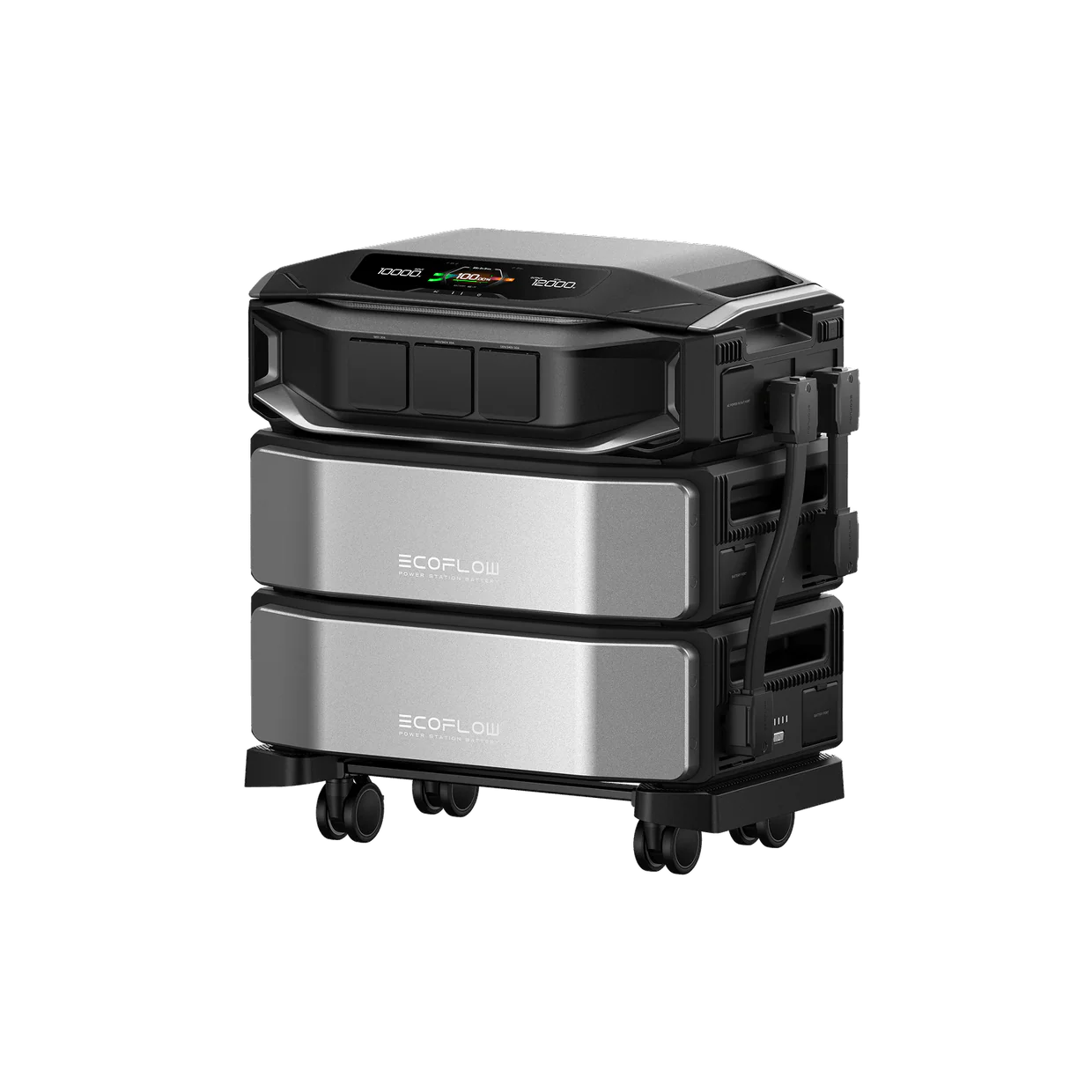
Like the original EcoFlow DPU, the new DELTA Pro Ultra X differs from your typical plug-and-play power station because the inverter and batteries are separate components.

The inverter sits on top, while the batteries stack below. One of the first differences we noticed from the original DELTA Pro Ultra is the fact that you now have the option to connect the batteries to the inverter via a long expansion cable. Seems like a simple thing, but this now allows you to build out a side-by-side configuration.
That cable adds so much flexibility that we’d probably say it’s one of the more meaningful improvements over the original DELTA Pro Ultra, which pretty much forced you to stack your batteries in one column per inverter. Now, you can have multiple shorter stacks, which makes it more like a traditional solar battery setup.
Another thing we noticed right away is the upgraded display screen, which is brighter and easier to read than the screen the original DELTA Pro Ultra came equipped with. The X-version also features a front-facing LED battery indicator bar. We thought it was just a cosmetic upgrade at first, but it changes color and shrinks in size depending on your battery life. This makes it easier to quickly check charge levels from across the room.
Strangely, EcoFlow decided to remove all of the USB-A and USB-C ports from this newer version. While this system is clearly designed for home backup purposes, so USB plugs are not overly important, the absence of direct DC charging ports feels like a bit of a disappointment, especially when competitors like the Anker SOLIX F3800 Plus and Jackery Explorer 5000 Plus still include them.
Another thing you’ll notice with this newer version is the fact that it has a ridiculously high 12kW output, and it can support 240V with a single inverter. While this is amazing, and we’ll cover it in more detail below, it does come with a caveat: you now need a minimum of two batteries, rather than just one. While this means you get a massive 12kW output and 12.2kWh storage capacity, it also means this is far from a budget-friendly unit.
Now that we’ve covered our first impressions and the main ways the DELTA Pro Ultra X’s design differs from that of the original, let’s take a look at how it performed during our testing:
One of the most impressive aspects of the EcoFlow DELTA Pro Ultra X is its idle consumption.
During testing, idle draw averaged around 36W, which is extremely low for a 12kW inverter. For perspective, the original EcoFlow DELTA Pro Ultra has around a 45W idle draw, while the Anker F3800 pulls closer to 80W while idling.
That efficiency makes it well suited for intermittent loads like sump pumps or refrigeration, where the system may sit energized but not heavily loaded for long stretches.
The original DELTA Pro Ultra had a solar input of 5.6kW, which was actually really impressive for the time. EcoFlow decided to nearly double it for the Ultra X, so you can now solar charge the unit at 10kW!
That’s a huge increase, and firmly places this unit in the territory where you’d want to connect it to a permanent solar array. Unlike a typical portable power station or solar generator, this is no longer a “plug in a few folding panels” type of system. It’s designed to connect to a mounted solar array with a high wattage.
When we tested the solar charging with our backyard solar panel setup, we hit that maximum input without running into any issues. If you’re wanting to lean into solar for backup purposes, or even just to reduce your electricity costs, the DELTA Pro Ultra X would be a viable portable or semi-permanent option.
That said, if you’re looking at purchasing solar panels, we’d highly recommend sourcing third-party panels from retailers, like Signature Solar, rather than paying premium prices for EcoFlow’s branded panels.
The system also offers a generator rectifier accessory, conceptually similar to the 100A EG4 Chargeverter, which converts generator AC into cleaner DC before charging the batteries. For users hoping to charge their unit with a high-output gas generator system, this is a smart addition that can help protect sensitive electronics.
As advertised, the AC charging can reach up to 12,000W, allowing two batteries to recharge in roughly an hour. When you’re talking about 12.2kW of storage capacity, having the option to charge everything this fast is pretty incredible.
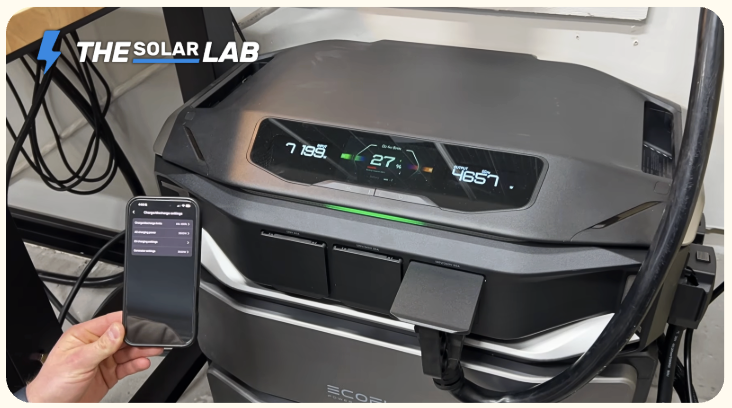
However, our testing revealed an important detail: when operating in UPS mode, the system combines charging power and load draw. For example, if charging is set to 4,000W in the app, and the home panel the unit is connected to is drawing 3,600W, the system may attempt to pull around 7,600W from the source.
In real-world use, this can trip breakers or overwhelm gas generators unless charge speed is manually reduced.
Another weird issue we discovered involved charging with the 240V EV-style cable. It turned out that the DELTA Pro Ultra X’s inverter can’t output power simultaneously when you’re charging with this cable. That means no UPS functionality during EV-input charging. It’s an odd limitation for a system positioned as a premium whole-home backup system.
The headline feature is the unit’s 12,000W inverter, which now features a true 50A outlet. This is something we have never seen fully implemented on any portable power station, so it’s actually a pretty big deal. For users running full-home transfer switches, or just wanting to use the unit inside their RV, it’s a major upgrade.
With that said, you do have to accept that double battery caveat we mentioned above. Basically, the system requires at least two batteries to unlock the full 12kW output. With only one battery connected, output is capped at 6,000W. That makes this feel more like a traditional split-phase solar inverter than a typical power station, and it’s important to understand before buying.
Load balancing is also extremely sensitive. When connected through a 50A outlet or transfer switch, even moderate imbalance between can trip the inverter. Traditional residential inverters tolerate minor imbalance a little better, and we suspect that this may frustrate users expecting seamless whole-home backup performance.
Unfortunately, the surge handling was a bit inconsistent during our testing. While the system could spike higher than that 12kW continuous output rating, we found starting our garage compressor was a little weird. It started effortlessly with some of the tests, and other times trying to fire up the compressor triggered the Ultra X to shut itself down. We don’t really know why this happened when running the same load, but this
inconsistency actually mirrors some of the behavior we observed when we pushed the original EcoFlow DELTA Pro Ultra in a dedicated video review.
While we did uncover some issues during testing, this is still an incredibly capable power station. Here’s just a few of the things we really like about it:
Delivering 12,000 watts from a single inverter is a huge step forward for the entire portable power station industry. Previous high output power stations required you to pair multiple units to achieve similar outputs.
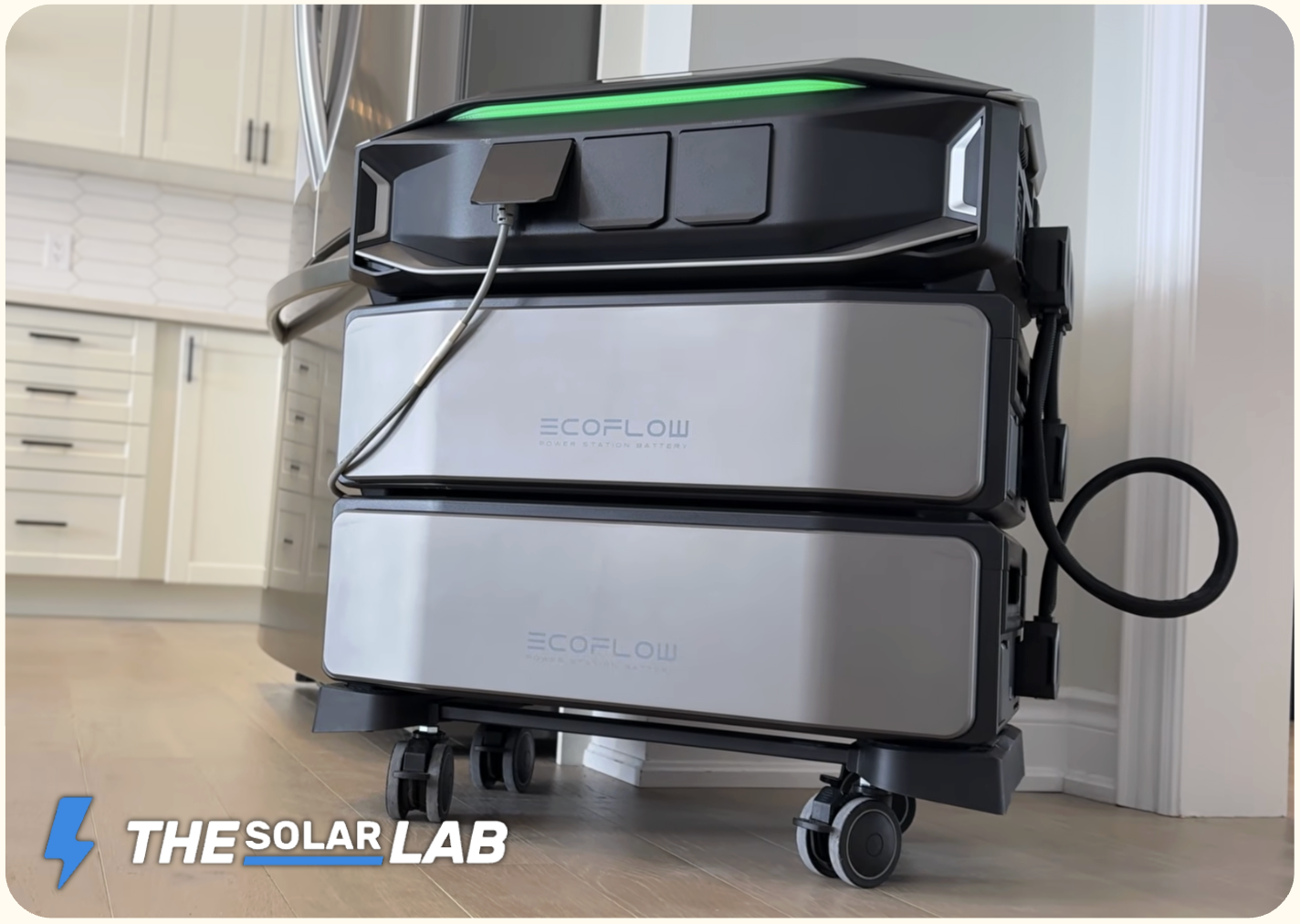
The inclusion of a true 50A port, meaning one that actually outputs 50-amps, is another major plus. While you do have the option to stack the batteries in multiple columns, not having to connect a second inverter unit makes installation simpler and cleaner.
This genuinely is a really powerful unit, and the fact the output power is right up there with popular permanent inverters, like the EG4 12000XP Off-Grid Inverter, is hugely impressive.
An average idle draw of around 36W for a 12kW inverter is impressive. That efficiency translates directly into longer standby times and less wasted battery power when the system is waiting for intermittent loads, including refrigerators, deep freezers, or sump pumps.
Whether you’re using it for off-grid power at a remote property, or just for backup power at your primary residence, that low idle rate is going to deliver some practical, real-world benefits.
The jump to a 10,000W solar input transforms this from a “large portable system” into something that legitimately deserves to be anchored to a permanent solar panel array. For users building out a high wattage solar panel setup on a backyard ground mount or roof racks, this rate of solar charging finally matches its battery capacity.
If you really want to build out your system, you can scale up the battery capacity to nearly 200kWh. If you also put together a 10kW solar array, you’d be talking about a serious off-grid setup.
The inclusion of a genuine 50A outlet removes the need for complicated workarounds. It allows cleaner integration with transfer switches and makes the system feel closer to a traditional residential inverter.
EcoFlow made things even easier by making the DELTA Pro Ultra X compatible with their latest EcoFlow Smart Home Panel 3, so you can really put that 50A output to use.
The addition of a long expansion battery cable allows side-by-side battery configurations, instead forcing you to stack all of your batteries on top of each other.
Sure, this vertical setup works when you’re just stacking several batteries, but once you get over four, having the flexibility to start a second stack with a single inverter is really helpful. Again, this makes installations cleaner, safer, and more adaptable to real-world spaces.
Now that we’ve covered all of the things we really liked about this unit, let’s jump into a few of the issues we discovered:
While the display screen is much brighter and easier to read than what we got with the original, the screen also lacks an always-on mode. No matter what we did in the app, the display screen still timed out after 30 minutes.
For those who want to monitor their system at all times, this is a minor but noticeable inconvenience. When we were testing it, we found it really frustrating, but we also realize most people aren’t going to care.
It’s also worth noting that the LED light bar does stay on at all times, and that allows you to quickly read the remaining battery capacity at a glance.
Removing all USB-A and USB-C ports makes sense, but we still found it a little disappointing. Even in home-backup scenarios, direct DC charging ports are useful and more efficient than running small electronics through the full inverter and taking up one of the AC plugs.
We get that this unit is aimed at whole-home backup, but it wouldn’t have hurt to put a couple of USB ports on the unit for charging portable devices.
The decision to go with a proprietary AC charging cable feels unnecessary. If you manage to lose or damage that cable, you’re forced to buy an EcoFlow replacement, rather than easily sourcing a standard cord.
We’d say around 90% of the power stations we test use the same generic AC charging cable, and it’s something you can order from Amazon for less than $20. Again, a minor gripe, but something that’s pretty annoying, especially when you’ve already dropped nearly $8,000 on a power station.
The inverter’s strict load balancing requirements can cause unexpected shutdowns if one leg pulls significantly more power than the other. This is more restrictive than many traditional residential inverters and can be frustrating in real-world home setups.
Needing two batteries to access the full 12kW inverter output is a bit of a limitation. Buyers expecting full performance from a single battery configuration may be surprised by the 6,000W cap.
With that said, EcoFlow does make this pretty clear on their website, so it’s not like they’re trying to ambush buyers.
While the system is capable of handling high surges on paper, real-world testing showed inconsistency when we tested it with our power-hungry compressor. Sometimes it handled this load effortlessly; other times it tripped under the same test.
It’s something we saw with the original unit, so it’s a shame that EcoFlow didn’t address it. That unpredictability reduces confidence for those planning to run heavy loads, like a demanding air conditioner, on a day-to-day basis.
The new DELTA Pro Ultra X was built for those who want full-home backup capabilities without permanently installing an off-grid or grid-tied solar system.
It makes sense for homeowners who need a 50A output, serious solar input, and long-term expandability, but still want the option to move or reconfigure the system later.
If your needs are smaller or more moderate, the original EcoFlow DELTA Pro Ultra may offer better value. Even the EcoFlow DELTA Pro 3 could be a viable alternative for those who don’t need that massive scalability and sky-high solar input.
With that said, if you want a ridiculously high output from a single inverter, plus the closest thing to a traditional solar system in portable form, the Ultra X delivers.
The EcoFlow DELTA Pro Ultra X pushes portable power closer than ever to be a viable alternative to a traditional residential solar power system. It’s powerful, scalable, and impressively efficient, but still retains the wheels and rapid disassembly that means it’s portable.
Luckily, most of the issues we uncovered could be addressed with a few firmware refinements and minor design tweaks. If EcoFlow takes that feedback seriously and uses it to refine the Ultra X, this system could easily become the gold standard for large-scale backup power.
We test solar products so you don’t have to. Check out our opinions and which units we think are worth your money and which ones aren't.
More Reviews >